
WELCOME and THANKS for joining us … for another Friday DIVE.
OPENING COMMENTS
- We are continuing our study of ROMANS.
- The plan last session was to go through Romans 3 and 4.
- That didn’t work as planned … and we only got through Romans 3.
- So … the plan for this session is to review chapterThe 4 … with the help of material from BibleProject.
- PRAYER REQUEST … from Sister Grace Oliphant … for her great grand-daughter, Kimberley Nairne(?), who is experiencing severe pains because of fibroids
OPENING PRAYER
- … for God to bless our meeting
- … for God to heal Kimberley of the bad fibroid condition
- In Romans 1 … The Gospel reveals the righteousness of God (Rom.1:16-17).
- which became necessary because Man had become unrighteous..
- The Gentiles had sinned … and become guilty
- In Romans 2 … The Jews had sinned … and become more guilty (given that they had the Law).
- In Romans 3 … God provided a way to become righteous … and it had nothing to do with law-keeping.
- The justification of Man was to be by faith alone.
As our representative, Jesus took into himself the just consequences of all the pain, sin, and death humans have caused in the world, and he overcame it by his resurrection from the dead. It’s Jesus’ new life that is now made available to others. Jesus became what we are, so that we might become what he is. All of this, Paul says, is how God justifies those who trust or have faith in Jesus.
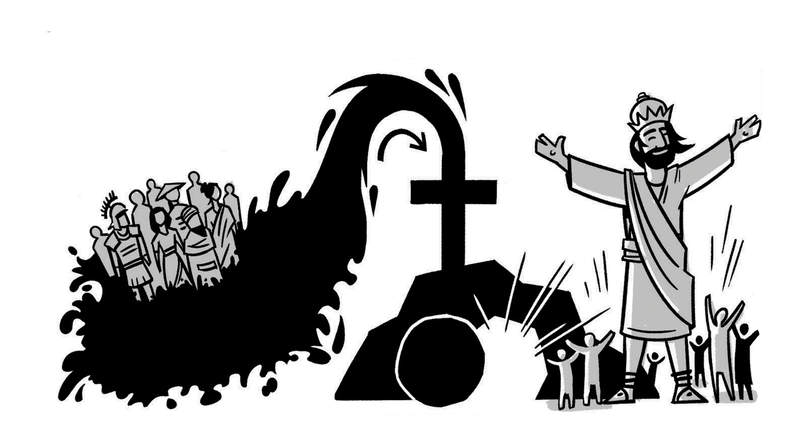
Justification is another rich Old Testament term for Paul, and it is related to God’s righteousness. It literally means “to declare righteous.” Because of what Jesus did on our behalf, we are given a new status before God. Instead of being found guilty, God declares that a person is in right relationship with him and forgiven. This results in a new family, as a person who trusts Jesus is given a place among God’s covenant people. Justification also results in a new future, which begins a journey of life transformation by God’s grace. All of these realities about justification are God’s gift to those who are in Christ because of their faith and loyalty to him.
Let’s notice something William Barclay said about justification … as an act of God’s grace …
“He uses a metaphor from the law courts which we call justification. This metaphor thinks of man on trial before God. The Greek word which is translated to justify is diakioun. All Greek verbs which end in “–oun” mean, not to make someone something, but to treat, to reckon, to account him as something. If an innocent man appears before a judge then to treat him as innocent is to acquit him. But the point about a man’s relationship to God is that he is utterly guilty, and yet God, in his amazing mercy, treats him, reckons him, accounts him as if he were innocent. That is what justification means.
“When Paul says that “God justifies the ungodly,” he means that God treats the ungodly as if he had been a good man. That is what shocked the Jews to the core of their being. To them to treat the bad man as if he was good was the sign of a wicked judge. “He who justifies the wicked is an abomination to the Lord” (Prov.17:15). “I will not acquit the wicked” (Exo.23:7). But Paul says that is precisely what God does.
“How can I know that God is like that? I know because Jesus said so. He came to tell us that God loves us, bad as we are. He came to tell us that, although we are sinners, we are still dear to God. When we discover that and believe it, it changes our whole relationship to God. We are conscious of our sin, but we are no longer in terror and no longer estranged. Penitent and brokenhearted we come to God, like a sorry child coming to his mother, and we know that the God we come to is love.
“That is what justification by faith in Jesus Christ means. It means that we are in a right relationship with God because we believe with all our hearts that what Jesus told us about God is true. We are no longer terrorized strangers from an angry God. We are children, erring children, trusting in their Father’s love for forgiveness. And we could never have found that right relationship with God, if Jesus had not come to live and to die to tell us how wonderfully he loves us.”
In chapter 4, Paul explores the huge implications that all this has for those who can now be part of God’s covenant family. He turns to the story of Abraham in Genesis 15. We’ll explore that in our next session.
Romans 4:1-3
What then shall we say that Abraham our father has found according to the flesh?
-
- What then … similar to “What, therefore …?”
- Romans 3:27-31 Where is boasting then? It is excluded. By what law? Of works? No, but by the law of faith. 28 Therefore we conclude that a man is [i]justified[declared righteous] by faith apart from the deeds of the law. (See Rom.3:20) 29 Or is He the God of the Jews only? Is He not also the God of the Gentiles? Yes, of the Gentiles also, 30 since there is one God who will justify the circumcised by faith and the uncircumcised through faith. 31 Do we then make void the law through faith? Certainly not! On the contrary, we establish the law.
2 For if Abraham was justified by works, he has something to boast about, but not before God. 3 For what does the Scripture say? “Abraham believed God, and it was accounted [imputed, credited, reckoned, counted] to him for righteousness.”
5 But to him who does not work but believes on Him who justifies the ungodly, his faith is accounted for righteousness, 6 just as David also describes the blessedness of the man to whom God imputes righteousness apart from works:
7 “Blessed are those whose lawless deeds are forgiven, And whose sins are covered;
8 Blessed is the man to whom the Lord shall not impute sin.”
9 Does this blessedness then come upon the circumcised only, or upon the uncircumcised also? For we say that faith was accounted to Abraham for righteousness.
10 How then was it accounted? While he was circumcised, or uncircumcised? Not while circumcised, but while uncircumcised.
11 And he received the sign of circumcision, a seal of the righteousness of the faith which he had while still uncircumcised, that he might be the father of all those who believe, though they are uncircumcised, that righteousness might be imputed to them also, 12 and the father of circumcision to those who not only are of the circumcision, but who also walk in the steps of the faith which our father Abraham had while still uncircumcised.
13 For the promise that he would be the heir of the world was not to Abraham or to his seed through the law, but through the righteousness of faith. 14 For if those who are of the law are heirs, faith is made void and the promise made of no effect, 15 because the law brings about wrath; for where there is no law there is no transgression.
16 Therefore it is of faith that it might be according to grace, so that the promise might be sure[certain] to all the seed, not only to those who are of the law, but also to those who are of the faith of Abraham, who is the father of us all 17 (as it is written, “I have made you a father of many nations”) in the presence of Him whom he believed — God, who gives life to the dead and calls those things which do not exist as though they did; 18 who, contrary to hope, in hope believed, so that he became the father of many nations, according to what was spoken, “So shall your descendants be.” 19 And not being weak in faith, he did not consider his own body, already dead (since he was about a hundred years old), and the deadness of Sarah’s womb. 20 He did not waver at the promise of God through unbelief, but was strengthened in faith, giving glory to God, 21 and being fully convinced that what He had promised He was also able to perform. 22 And therefore “it* was accounted to him for righteousness.”
* it = Abraham’s belief/faith (see Rom.1:3)
23 Now it was not written for his sake alone that it was imputed to him, 24 but also for us. It shall be imputed to us who believe in Him who raised up Jesus our Lord from the dead, 25 who was delivered up because of our offenses, and was raised because of our justification.
According to William Barclay …
THE FAITH WHICH TAKES GOD AT HIS WORD
Rom. 4:1-8
What, then, shall we say that Abraham, our forefather from whom we take our human descent, found? If Abraham entered into a right relationship with God by means of work, he has some ground for boasting–but not in regard to God. For what does scripture say? “Abraham trusted in God and it was accounted to him for righteousness.” The man who works does not receive his pay as a favour; he receives it as a debt due to him. But, as for the man who does not depend on work, but who trusts in the God who treats the ungodly as he would treat a good man, his faith is accounted as righteousness. Just so, David speaks of the counting happy of the man to whom God accounts righteousness apart from works–“Happy they whose transgressions are forgiven and whose sins are covered! Happy the man to whom God does not account sin!”
Paul moves on to speak of Abraham for three reasons.
(i) The Jews regarded Abraham as the great founder of the race and the pattern of all that a man should be. Very naturally they ask, “If all that you say is true, what was the special thing that was given to Abraham when God picked him out to be the ancestor of his special people? What makes him different from other people?” That is the question which Paul is going on to answer.
(ii) Paul has just been seeking to prove that what makes a man right with God is not the performance of the works that the law lays down, but the simple trust of complete yieldedness which takes God at his word and believes that he still loves us even when we have done nothing to deserve that love. The immediate reaction of the Jews was, “This is something entirely new and a contradiction of all that we have been taught to believe. This doctrine is completely incredible.” Paul’s answer is, “So far from being new, this doctrine is as old as the Jewish faith. So far from being an heretical novelty, it is the very basis of Jewish religion.” That is what he is going on to prove.
(iii) Paul begins to speak about Abraham because he was a wise teacher who knew the human mind and the way it works. He has been talking about faith. Now faith is an abstract idea. The ordinary human mind finds abstract ideas very hard to grasp. The wise teacher knows that every idea must become a person, for the only way in which an ordinary person can grasp an abstract idea is to see it in action, embodied in a person. So Paul, in effect, says, “I have been talking about faith. If you want to see what faith is, look at Abraham.”
When Paul began to speak about Abraham, he was on ground that every Jew knew and understood. In their thoughts Abraham held a unique position. He was the founder of the nation. He was the man to whom God had first spoken. He was the man who had, in a unique way, been chosen by God and who had heard and obeyed him. The Rabbis had their own discussions about Abraham. To Paul the essence of his greatness was this. God had come to Abraham and bidden him leave home and friends and kindred and livelihood, and had said to him, “If you make this great venture of faith, you will become the father of a great nation.” Thereupon Abraham had taken God at his word. He had not argued; he had not hesitated; he went out not knowing where he was to go (Heb.11:8). It was not the fact that Abraham had meticulously performed the demands of the law that put him into his special relationship with God, it was his complete trust in God and his complete willingness to abandon his life to him. That for Paul was faith, and it was Abraham’s faith which made God regard him as a good man.
Some few, some very few, of the more advanced Rabbis believed that. There was a rabbinic commentary which said, “Abraham, our father, inherited this world and the world to come solely by the merit of faith whereby he believed in the Lord; for it is said, `And he believed in the Lord, and he accounted it to him for righteousness.'”
But the great majority of the Rabbis turned the Abraham story to suit their own beliefs. They held that because he was the only righteous man of his generation, therefore he was chosen to be the ancestor of God’s special people. The immediate answer is, “But how could Abraham keep the law when he lived hundreds of years before it was given?” The Rabbis advanced the odd theory that he kept it by intuition or anticipation. “At that time,” says the Apocalypse of Baruch (Bar.57:2), “the unwritten law was named among them, and the works of the commandment were then fulfilled.” “He kept the law of the Most High,” says Ecclesiasticus (Sir. 44:20-21), “and was taken into covenant with God…. Therefore God assured him by an oath that the nations should be blessed in his seed.” The Rabbis were so in love with their theory of works that they insisted that it was because of his works that Abraham was chosen, although it meant that they had to argue that he knew the law by anticipation, since it had not yet come.
Here, again, we have the root cleavage between Jewish legalism and Christian faith. The basic thought of the Jews was that a man must earn God’s favour. The basic thought of Christianity is that all a man can do is to take God at his word and stake everything on the faith that his promises are true. Paul’s argument was — and he was unanswerably right — that Abraham entered into a right relationship with God, not because he did all kinds of legal works, but because he cast himself, just as he was, on God’s promise.
“If our love were but more simple, We should take him at his word; And our lives would be all sunshine, In the sweetness of our Lord.”
It is the supreme discovery of the Christian life that we do not need to torture ourselves with a losing battle to earn God’s love but rather need to accept in perfect trust the love which God offers to us. True, after that, any man of honour is under the life-long obligation to show himself worthy of that love. But he is no longer a criminal seeking to obey an impossible law; he is a lover offering his all to one who loved him when he did not deserve it.
Sir James Barrie once told a story about Robert Louis Stevenson. “When Stevenson went to Samoa he built a small hut, and afterwards went into a large house. The first night he went into the large house he was feeling very tired and sorrowful that he had not had the forethought to ask his servant to bring him coffee and, cigarettes. Just as he was thinking that, the door opened, and the native boy came in with a tray carrying cigarettes and coffee. And Mr Stevenson said to him, in the native language, `Great is your forethought’; and the boy corrected him, and said, `Great is the love.'” The service was rendered, not because of the coercion of servitude, but because of the compulsion of love. That also is the motive of Christian goodness.
THE FATHER OF THE FAITHFUL
Rom. 4:9-12
Did, then, this pronouncing of blessedness come to Abraham when he was circumcised? Or when he was uncircumcised? We are just saying, “His faith was accounted to Abraham for righteousness.” Under what circumstances was it then accounted? Was it while he was circumcised? Or was it while he was uncircumcised? It was not while he was circumcised, but while he was uncircumcised. And he received the sign of circumcision as a seal of that relationship to God whose source was faith while he was still uncircumcised. This happened that he might be the father of all who believe while they are uncircumcised, so that the accounting of righteousness may come to them too; and that he might also be the father of those who are circumcised, and by that I mean, not those who are circumcised only, but who walk in the steps of that faith which our father Abraham showed when he was still uncircumcised.
To understand this passage we must understand the importance that the Jew attached to circumcision. To the Jew a man who was not circumcised was quite literally not a Jew, no matter what his parentage was. The Jewish circumcision prayer runs: “Blessed is he who sanctified his beloved from the womb, and put his ordinance upon his flesh, and sealed his offspring with the sign of the holy covenant.” The rabbinic ordinance lays it down: “Ye shall not eat of the Passover unless the seal of Abraham be in your flesh.” If a Gentile accepted the Jewish faith, he could not enter fully into it without three things — baptism, sacrifice and circumcision.
The Jewish objector, whom Paul is answering all the time, is still fighting a rear-guard action. “Suppose I admit,” he says, “all that you say about Abraham and about the fact that it was his complete trust that gained him an entry into a right relationship with God, you will still have to agree that he was circumcised.”
Paul has an unanswerable argument. The story of Abraham’s call, and of God’s blessing on him, is in Gen.15:6; the story of Abraham’s circumcision is in Gen.17:10-15. He was not, in fact, circumcised until fourteen years after he had answered God’s call and entered into the unique relationship with God. Circumcision was not the gateway to his right relationship with God; it was only the sign and the seal that he had already entered into it. His being accounted righteous had nothing to do with circumcision and everything to do with his act of faith. From this unanswerable fact Paul makes two great deductions.
(i) Abraham is not the father of those who have been circumcised; he is the father of those who make the same act of faith in God as he made. He is the father of every man in every age who takes God at his word as he did. This means that the real Jew is the man who trusts God as Abraham did, no matter what his race is. All the great promises of God are made not to the Jewish nation, but to the man who is Abraham’s descendant because he trusts God as he did. Jew has ceased to be a word which describes a nationality and has come to describe a way of life and a reaction to God. The descendants of Abraham are not the members of any particular nation, but those in every nation who belong to the family of God.
(ii) The converse is also true. A man may be a Jew of pure lineage and may be circumcised; and yet in the real sense may be no descendant of Abraham. He has no right to call Abraham his father or to claim the promises of God, unless he makes that venture of faith that Abraham made.
In one short paragraph Paul has shattered all Jewish thought. The Jew always believed that just because he was a Jew he automatically enjoyed the privilege of God’s blessings and immunity from his punishment. The proof that he was a Jew was circumcision. So literally did some of the Rabbis take this that they actually said that, if a Jew was so bad that he had to be condemned by God, there was an angel whose task it was to make him uncircumcised again before he entered into punishment.
Paul has laid down the great principle that the way to God is not through membership of any nation, not through any ordinance which makes a mark upon a man’s body; but by the faith which takes God at his word and makes everything dependent, not on man’s achievement, but solely upon God’s grace.
ALL IS OF GRACE
Rom. 4:13-17
It was not through law that there came to Abraham or to his seed the promise that he would inherit the earth, but it came through that right relationship with God which has its origin in faith. If they who are vassals of the law are heirs, then faith is drained of its meaning, and the promise is rendered inoperative; for the law produces wrath, but where law does not exist, neither can transgression exist. So, then, the whole process depends on faith, in order that it may be a matter of grace, so that the promise should be guaranteed to all Abraham’s descendants, not only to those who belong to the tradition of the law, but also to those who are of Abraham’s family in virtue of faith. Abraham who is the father of us all — as it stands written, “I have appointed you a father of many nations”–in the sight of that God in whom he believed, that God who calls the dead into life, and who calls into being even things which do not exist.
To Abraham God made a very great and wonderful promise. He promised that he would become a great nation, and that in him all families of the earth would be blessed (Gen.12:2-3). In truth, the earth would be given to him as his inheritance. Now that promise came to Abraham because of the faith that he showed towards God. It did not come because he piled up merit by doing works of the law. It was the outgoing of God’s generous grace in answer to Abraham’s absolute faith. The promise, as Paul saw it, was dependent on two things and two things only–the free grace of God and the perfect faith of Abraham.
The Jews were still asking, “How can a man enter into the right relationship with God so that he too may inherit this great promise?” Their answer was, “He must do so by acquiring merit in the sight of God through doing works which the law prescribes.” That is to say, he must do it by his own efforts. Paul saw with absolute clearness that this Jewish attitude had completely destroyed the promise. It had done so for this reason–no man can fully keep the law; therefore, if the promise depends on keeping the law, it can never be fulfilled.
Paul saw things in terms of black and white. He saw two mutually exclusive ways of trying to get into a right relationship with God. On the one hand there was dependence on human effort; on the other, dependence on divine grace. On the one hand there was the constant losing battle to obey an impossible law; on the other, there was the faith which simply takes God at his word.
On each side there were three things.
- On the one side there is
- (i) God’s promise. There are two Greek words which mean promise. Huposchesis means a promise which is entered into upon conditions. “I promise to do this if you promise to do that.” Epaggelia means a promise made out of the goodness of someone’s heart quite unconditionally. It is epaggelia that Paul uses of the promise of God. It is as if he is saying, “God is like a human father; he promises to love his children no matter what they do.” True, he will love some of us with a love that makes him glad, and he will love some of us with a love that makes him sad; but in either case it is a love which will never let us go. It is dependent not on our merit but only on God’s own generous heart.
- (ii) There is faith. Faith is the certainty that God is indeed like that. It is staking everything on his love.
- (iii) There is grace. A gift of grace is always something which is unearned and undeserved. The truth is that man can never earn the love of God. He must always find his glory, not in what he can do for God, but in what God has done for him.
- On the other side there is …
- (i) law. The trouble about law has always been that it can diagnose the malady but cannot effect a cure. Law shows a man where he goes wrong, but does not help him to avoid going wrong. There is in fact, as Paul will later stress, a kind of terrible paradox in law. It is human nature that when a thing is forbidden it has a tendency to become desirable. “Stolen fruits are sweetest.” Law, therefore, can actually move a man to desire the very thing which it forbids. The essential complement of law is judgment, and, so long as a man lives in a religion whose dominant thought is law, he cannot see himself as anything other than a condemned criminal at the bar of God’s justice.
- (ii) There is transgression. Whenever law is introduced, transgression follows. No one can break a law which does not exist; and no one can be condemned for breaking a law of whose existence he was ignorant. If we introduce law and stop there, if we make religion solely a matter of obeying law, life consists of one long series of transgressions waiting to be punished.
- (iii) There is wrath. Think of law, think of transgression, and inevitably the next thought is wrath. Think of God in terms of law and you cannot do other than think of him in terms of outraged justice. Think of man in terms of law and you cannot do other than think of him as destined for the condemnation of God.
So Paul sets before the Romans two ways. The one is a way in which a man seeks a right relationship with God through his own efforts. It is doomed to failure. The other is a way in which a man enters by faith into a relationship with God, which by God’s grace already exists for him to come into in trust.
BELIEVING IN THE GOD WHO MAKES THE IMPOSSIBLE POSSIBLE
Rom. 4:18-25
In hope Abraham believed beyond hope that he would become the father of many nations, as the saying had it, “So will be your seed.?” He did not weaken in his faith, although he was well aware that by this time his body had lost its vitality (for he was a hundred years old), and that the womb of Sarah was without life. He did not in unfaith waver at the promise of God, but he was revitalized by his faith, and he gave glory to God, and he was firmly convinced that he who had made the promise was also able to perform it. So this faith was accounted to him as righteousness. It was not only for his sake this “it was accounted to him for righteousness” was written. It was written also for our sakes; for it will be so reckoned to us who believe in him who raised Jesus, our Lord, from the dead, who was delivered up for our sin and raised to bring us into a right relationship with God.
The last passage ended by saying that Abraham believed in the God who calls the dead into life and who brings into being even things which have no existence at all. This passage turns Paul’s thoughts to another outstanding example of Abraham’s willingness to take God at his word. The promise that all families of the earth would be blessed in his descendants was given to Abraham when he was an old man. His wife, Sarah, had always been childless; and now, when he was one hundred years old and she was ninety (Gen.17:17), there came the promise that a son would be born to them. It seemed, on the face of it, beyond all belief and beyond all hope of fulfilment, for he was long past the age of begetting and she long past the age of bearing a son. Yet, once again, Abraham took God at his word and once again it was this faith that was accounted to Abraham for righteousness.
It was this willingness to take God at his word which put Abraham into a right relationship with him. Now the Jewish Rabbis had a saying to which Paul here refers. They said, “What is written of Abraham is written also of his children.” They meant that any promise that God made to Abraham extends to his children also. Therefore, if Abraham’s willingness to take God at his word brought him into a right relationship with God, so it will be with us. It is not works of the law, it is this trusting faith which establishes the relationship between God and a man which ought to exist.
The essence of Abraham’s faith in this case was that he believed that God could make the impossible possible. So long as we believe that everything depends on our efforts, we are bound to be pessimists, for experience has taught the grim lesson that our own efforts can achieve very little. When we realize that it is not our effort but God’s grace and power which matter, then we become optimists, because we are bound to believe that with God nothing is impossible.
It is told that once Saint Theresa set out to build a convent with a sum the equivalent of twelve pence as her complete resources. Someone said to her, “Not even Saint Theresa can accomplish much with twelve pence.” “True,” she answered, “but Saint Theresa and twelve pence and God can do anything.” A man may well hesitate to attempt a great task by himself; there is nothing which he need hesitate to attempt with God. Ann Hunter Small, the great missionary teacher, tells how her father, himself a missionary, used to say: “Oh! the wickedness as well as the stupidity of the croakers!” And she herself had a favourite saying: “A church which is alive dares to do anything.” That daring only becomes possible to a man and to a church who take God at his word.
Romans 5-8: The Gospel Creates a New Humanity
After showing how Jesus is forming a new covenant family of people from all nations, Paul goes on to claim that these people are the new humanity that fulfills God’s promises to ancient Israel by obeying the Torah in the power of the Spirit.
Paul begins by exploring how Jesus’ family is a new kind of humanity (Rom. 5). He looks back at the first human character in the biblical story, Adam, whose name means “humanity.” Adam and all humanity have chosen sin and selfishness, and as a consequence, they face God’s judgment. They’ve become enslaved to sin’s influence, resulting in death. Paul then contrasts Adam with Jesus, the “new Adam,” a human who lived in faithful obedience to God through his act of sacrificial love. Jesus offers his life as a gift to others so that they can be justified before God. And now Jesus stands as the head of a new humanity that is being transformed by the very same gift.
This leads right into chapter 6, where Paul reminds the Christians in Rome that choosing to follow Jesus means leaving their old Adam-like humanity behind and entering into the new Jesus-style humanity. And the sacred physical symbol of that transition was the immersion of their baptism. Their old humanity died with Jesus as they entered the water, but their new humanity was raised with him from the dead as they came up out of the water. When a person trusts in Jesus, their life is joined to his, and what’s true of him becomes true of them. It’s when people accept their identity as new Jesus-like humans that they are liberated to become wholehearted people who can love God and their neighbor.
Now, if creating this new humanity was always God’s purpose, then, Paul asks in chapter 7, what was the point of God giving Israel the law, or, in Hebrew, the Torah? Paul says that the commands in the Torah were good and showed God’s will for how Israel should live. However, if you read the storyline of the Torah, Israel broke all of its commands.
The more laws Israel received, the more they replayed the sin of Adam in rebellion. Even when God gave the people specific rules to obey, it didn’t fix the problem of the sinful human heart. So, paradoxically, the laws of the Torah made Israel even more guilty. But Paul says that paradox was the very point. God’s goal was to make it crystal clear that evil had hijacked the human heart, and the Torah, as good as it was, couldn’t do a thing about it.
In chapter 8, however, Paul says that the solution has arrived through Jesus and the Spirit. The commands of the Torah had acted like a magnifying glass, focusing the problem of the human condition in one place, Israel. But now Israel’s representative, Jesus the Messiah, has paid for and dealt with all that sin through his death and resurrection. He has released his Spirit into his new family to transform their hearts so that they can truly fulfill the ultimate call of all of the Torah’s commands—to love God and neighbor. God’s renewal of human beings is the first step in his larger mission to rescue and renew all creation, making it into a place where his love gets the final word.
While chapters 1-8 explain how God’s eternal purpose was fulfilled through Jesus, we’re still left with the question of the status of the Israelites who don’t acknowledge Jesus as their Messiah. How does this story fulfill God’s ancient promises to them?
Romans 9-11: The Gospel Fulfills God’s Promise to Israel
Paul begins chapter 9 with his own anguish over fellow Israelites who don’t think Jesus is their Messiah. Then he reflects on the Israel of the past and the Old Testament. He reminds us that simply being an ethnic Israelite, a physical descendant of Abraham, has never automatically made a person a faithful member of his covenant family. Paul shows us how God has always selected a subset from Abraham’s family line to carry on the line of promise. His point is that the line of promise is carried on by those who follow Jesus. He reminds us that for a long time, people inside and outside Abraham’s family have rejected God’s will. Paul recalls the story of Israel and the golden calf as well as Pharaoh’s rebellion, showing how God was able to orchestrate events so that the people’s rejection actually accomplished his own redemptive purposes.
In chapter 10, Paul turns his focus to the Israel of the present. The reason so many Israelites reject Jesus is that they’re basing their covenant relationship with God on their performance of the commands of the Torah. Sadly, they don’t recognize what God has done through Jesus to create the new covenant family.
In chapter 11, Paul asks about Israel in the future. Will God write his own people off? Paul says no. There are many Jewish people, including himself, who have recognized Jesus as the Messiah, but there are also a lot who haven’t. Once again, God has used this rejection for his own purposes, as it has caused the Gospel to spread farther into the Gentile world, making the family of Abraham even larger and more multiethnic. Paul describes God’s covenant family as a big olive tree. The rejectors of Jesus are branches that have been broken off, while these Gentiles are like wild branches that have been grafted on. However, Paul does say that one day Jesus will be acknowledged by his own people. He doesn’t offer any details about how but simply trusts in God’s character and promises that he will not give up on his covenant people.
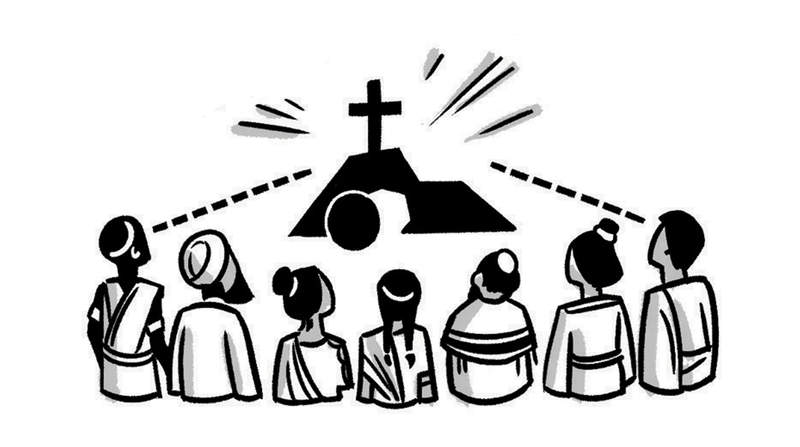
Romans 12-16: The Gospel Unifies the Church
These ideas transition into the final section of the book of Romans, chapters 12-16. Because of their faith in Jesus, both Jews and Gentiles are a part of Abraham’s family. This new humanity is being transformed by God’s Spirit and is fulfilling God’s ancient promises. The only reasonable response to this is for these Jewish and non-Jewish Christians to become a unified church community.
In chapters 12-13, Paul shows us that this unity comes from a commitment to love and forgiveness. Love will look like everyone using their diverse gifts and talents to serve one another. Unity also means having humility and forgiveness. When these different ethnic groups and cultures come together in Jesus, conflict is inevitable and can only be overcome through the hard work of forgiveness. All of this is how these believers show the greatest Christian virtue, love, which fulfills the Torah’s greatest commands to love God and neighbor.
Chapters 14-15 focus on the issues creating ethnic divisions in the church, specifically disputes about Jewish food laws and observing the Sabbath. Paul says that these practices don’t define who is in or out of Jesus’ family. If the people differ over these culturally important but nonessential issues, they need to respect each other’s differences. In this way, love is what heals and unifies Jesus’ family.
Paul closes his letter by first commending Phoebe, a key leader of the church in Cenchreae. She had the honor of carrying and likely reading this letter aloud to the Roman churches. Paul further concludes by greeting all the people that he hasn’t seen for a while.
All the pieces of this letter fit together into a profound masterpiece of Paul’s writing. It explained and served to spread the message of Jesus’ new covenant family in the 1st century, and it continues to do the same in our world today.
The Book of Romans
Faith Triumphs in Trouble
5 Therefore, having been justified by faith, [ak]we have peace with God through our Lord Jesus Christ, 2 through whom also we have access by faith into this grace in which we stand, and rejoice in hope of the glory of God. 3 And not only that, but we also glory in tribulations, knowing that tribulation produces [al]perseverance; 4 and perseverance, [am]character; and character, hope. 5 Now hope does not disappoint, because the love of God has been poured out in our hearts by the Holy Spirit who was given to us.
Christ in Our Place
6 For when we were still without strength, [an]in due time Christ died for the ungodly. 7 For scarcely for a righteous man will one die; yet perhaps for a good man someone would even dare to die. 8 But God demonstrates His own love toward us, in that while we were still sinners, Christ died for us. 9 Much more then, having now been justified by His blood, we shall be saved from wrath through Him. 10 For if when we were enemies we were reconciled to God through the death of His Son, much more, having been reconciled, we shall be saved by His life. 11 And not only that, but we also rejoice in God through our Lord Jesus Christ, through whom we have now received the reconciliation.
Death in Adam, Life in Christ
12 Therefore, just as through one man sin entered the world, and death through sin, and thus death spread to all men, because all sinned— 13 (For until the law sin was in the world, but sin is not imputed when there is no law. 14 Nevertheless death reigned from Adam to Moses, even over those who had not sinned according to the likeness of the transgression of Adam, who is a type of Him who was to come. 15 But the free gift is not like the [ao]offense. For if by the one man’s offense many died, much more the grace of God and the gift by the grace of the one Man, Jesus Christ, abounded to many. 16 And the gift is not like that which came through the one who sinned. For the judgment which came from one offense resulted in condemnation, but the free gift which came from many [ap]offenses resulted in justification. 17 For if by the one man’s [aq]offense death reigned through the one, much more those who receive abundance of grace and of the gift of righteousness will reign in life through the One, Jesus Christ.)
18 Therefore, as through [ar]one man’s offense judgment came to all men, resulting in condemnation, even so through one[as] Man’s righteous act the free gift came to all men, resulting in justification of life. 19 For as by one man’s disobedience many were made sinners, so also by one Man’s obedience many will be made righteous.
20 Moreover the law entered that the offense might abound. But where sin abounded, grace abounded much more, 21 so that as sin reigned in death, even so grace might reign through righteousness to eternal life through Jesus Christ our Lord.
Dead to Sin, Alive to God
6 What shall we say then? Shall we continue in sin that grace may abound? 2 Certainly not! How shall we who died to sin live any longer in it? 3 Or do you not know that as many of us as were baptized into Christ Jesus were baptized into His death? 4 Therefore we were buried with Him through baptism into death, that just as Christ was raised from the dead by the glory of the Father, even so we also should walk in newness of life.
5 For if we have been united together in the likeness of His death, certainly we also shall be in the likeness of His resurrection, 6 knowing this, that our old man was crucified with Him, that the body of sin might be [at]done away with, that we should no longer be slaves of sin. 7 For he who has died has been [au]freed from sin. 8 Now if we died with Christ, we believe that we shall also live with Him, 9 knowing that Christ, having been raised from the dead, dies no more. Death no longer has dominion over Him. 10 For the death that He died, He died to sin once for all; but the life that He lives, He lives to God. 11 Likewise you also, [av]reckon yourselves to be dead indeed to sin, but alive to God in Christ Jesus our Lord.
12 Therefore do not let sin reign in your mortal body, that you should obey it in its lusts. 13 And do not present your members as [aw]instruments of unrighteousness to sin, but present yourselves to God as being alive from the dead, and your members as instruments of righteousness to God. 14 For sin shall not have dominion over you, for you are not under law but under grace.
From Slaves of Sin to Slaves of God
15 What then? Shall we sin because we are not under law but under grace? Certainly not! 16 Do you not know that to whom you present yourselves slaves to obey, you are that one’s slaves whom you obey, whether of sin leading to death, or of obedience leading to righteousness? 17 But God be thanked that though you were slaves of sin, yet you obeyed from the heart that form of doctrine to which you were [ax]delivered. 18 And having been set free from sin, you became slaves of righteousness. 19 I speak in human terms because of the weakness of your flesh. For just as you presented your members as slaves of uncleanness, and of lawlessness leading to more lawlessness, so now present your members as slaves of righteousness [ay]for holiness.
20 For when you were slaves of sin, you were free in regard to righteousness. 21 What fruit did you have then in the things of which you are now ashamed? For the end of those things is death. 22 But now having been set free from sin, and having become slaves of God, you have your fruit [az]to holiness, and the end, everlasting life. 23 For the wages of sin is death, but the [ba]gift of God is eternal life in Christ Jesus our Lord.
Freed from the Law
7 Or do you not know, brethren (for I speak to those who know the law), that the law [bb]has dominion over a man as long as he lives? 2 For the woman who has a husband is bound by the law to her husband as long as he lives. But if the husband dies, she is released from the law of her husband. 3 So then if, while her husband lives, she marries another man, she will be called an adulteress; but if her husband dies, she is free from that law, so that she is no adulteress, though she has married another man. 4 Therefore, my brethren, you also have become dead to the law through the body of Christ, that you may be married to another—to Him who was raised from the dead, that we should bear fruit to God. 5 For when we were in the flesh, the sinful passions which were aroused by the law were at work in our members to bear fruit to death. 6 But now we have been delivered from the law, having died to what we were held by, so that we should serve in the newness of the Spirit and not in the oldness of the letter.
Sin’s Advantage in the Law
7 What shall we say then? Is the law sin? Certainly not! On the contrary, I would not have known sin except through the law. For I would not have known covetousness unless the law had said, “You shall not covet.” 8 But sin, taking opportunity by the commandment, produced in me all manner of evil desire. For apart from the law sin was dead. 9 I was alive once without the law, but when the commandment came, sin revived and I died. 10 And the commandment, which was to bring life, I found to bring death. 11 For sin, taking occasion by the commandment, deceived me, and by it killed me. 12 Therefore the law is holy, and the commandment holy and just and good.
Law Cannot Save from Sin
13 Has then what is good become death to me? Certainly not! But sin, that it might appear sin, was producing death in me through what is good, so that sin through the commandment might become exceedingly sinful. 14 For we know that the law is spiritual, but I am carnal, sold under sin. 15 For what I am doing, I do not understand. For what I will to do, that I do not practice; but what I hate, that I do. 16 If, then, I do what I will not to do, I agree with the law that it is good. 17 But now, it is no longer I who do it, but sin that dwells in me. 18 For I know that in me (that is, in my flesh) nothing good dwells; for to will is present with me, but how to perform what is good I do not find. 19 For the good that I will to do, I do not do; but the evil I will not to do, that I practice. 20 Now if I do what I will not to do, it is no longer I who do it, but sin that dwells in me.
21 I find then a law, that evil is present with me, the one who wills to do good. 22 For I delight in the law of God according to the inward man. 23 But I see another law in my members, warring against the law of my mind, and bringing me into captivity to the law of sin which is in my members. 24 O wretched man that I am! Who will deliver me from this body of death? 25 I thank God—through Jesus Christ our Lord!
So then, with the mind I myself serve the law of God, but with the flesh the law of sin.
Free from Indwelling Sin
8 There is therefore now no condemnation to those who are in Christ Jesus, who[bc] do not walk according to the flesh, but according to the Spirit. 2 For the law of the Spirit of life in Christ Jesus has made me free from the law of sin and death. 3 For what the law could not do in that it was weak through the flesh, God did by sending His own Son in the likeness of sinful flesh, on account of sin: He condemned sin in the flesh, 4 that the righteous requirement of the law might be fulfilled in us who do not walk according to the flesh but according to the Spirit. 5 For those who live according to the flesh set their minds on the things of the flesh, but those who live according to the Spirit, the things of the Spirit. 6 For to be [bd]carnally minded is death, but to be spiritually minded is life and peace. 7 Because the [be]carnal mind is enmity against God; for it is not subject to the law of God, nor indeed can be. 8 So then, those who are in the flesh cannot please God.
9 But you are not in the flesh but in the Spirit, if indeed the Spirit of God dwells in you. Now if anyone does not have the Spirit of Christ, he is not His. 10 And if Christ is in you, the body is dead because of sin, but the Spirit is life because of righteousness. 11 But if the Spirit of Him who raised Jesus from the dead dwells in you, He who raised Christ from the dead will also give life to your mortal bodies [bf]through His Spirit who dwells in you.
Sonship Through the Spirit
12 Therefore, brethren, we are debtors—not to the flesh, to live according to the flesh. 13 For if you live according to the flesh you will die; but if by the Spirit you put to death the deeds of the body, you will live. 14 For as many as are led by the Spirit of God, these are sons of God. 15 For you did not receive the spirit of bondage again to fear, but you received the Spirit of adoption by whom we cry out, “Abba,[bg] Father.” 16 The Spirit Himself bears witness with our spirit that we are children of God, 17 and if children, then heirs—heirs of God and joint heirs with Christ, if indeed we suffer with Him, that we may also be glorified together.
From Suffering to Glory
18 For I consider that the sufferings of this present time are not worthy to be compared with the glory which shall be revealed in us. 19 For the earnest expectation of the creation eagerly waits for the revealing of the sons of God. 20 For the creation was subjected to futility, not willingly, but because of Him who subjected it in hope; 21 because the creation itself also will be delivered from the bondage of [bh]corruption into the glorious liberty of the children of God. 22 For we know that the whole creation groans and labors with birth pangs together until now. 23 Not only that, but we also who have the firstfruits of the Spirit, even we ourselves groan within ourselves, eagerly waiting for the adoption, the redemption of our body. 24 For we were saved in this hope, but hope that is seen is not hope; for why does one still hope for what he sees? 25 But if we hope for what we do not see, we eagerly wait for it with perseverance.
26 Likewise the Spirit also helps in our weaknesses. For we do not know what we should pray for as we ought, but the Spirit Himself makes intercession [bi]for us with groanings which cannot be uttered. 27 Now He who searches the hearts knows what the mind of the Spirit is, because He makes intercession for the saints according to the will of God.
28 And we know that all things work together for good to those who love God, to those who are the called according to His purpose. 29 For whom He foreknew, He also predestined to be conformed to the image of His Son, that He might be the firstborn among many brethren. 30 Moreover whom He predestined, these He also called; whom He called, these He also justified; and whom He justified, these He also glorified.
God’s Everlasting Love
31 What then shall we say to these things? If God is for us, who can be against us? 32 He who did not spare His own Son, but delivered Him up for us all, how shall He not with Him also freely give us all things? 33 Who shall bring a charge against God’s elect? It is God who justifies. 34 Who is he who condemns? It is Christ who died, and furthermore is also risen, who is even at the right hand of God, who also makes intercession for us. 35 Who shall separate us from the love of Christ? Shall tribulation, or distress, or persecution, or famine, or nakedness, or peril, or sword? 36 As it is written:
“For Your sake we are killed all day long;
We are accounted as sheep for the slaughter.”
37 Yet in all these things we are more than conquerors through Him who loved us. 38 For I am persuaded that neither death nor life, nor angels nor principalities nor powers, nor things present nor things to come, 39 nor height nor depth, nor any other created thing, shall be able to separate us from the love of God which is in Christ Jesus our Lord.
Israel’s Rejection of Christ
9 I tell the truth in Christ, I am not lying, my conscience also bearing me witness in the Holy Spirit, 2 that I have great sorrow and continual grief in my heart. 3 For I could wish that I myself were accursed from Christ for my brethren, my [bj]countrymen according to the flesh, 4 who are Israelites, to whom pertain the adoption, the glory, the covenants, the giving of the law, the service of God, and the promises; 5 of whom are the fathers and from whom, according to the flesh, Christ came, who is over all, the eternally blessed God. Amen.
Israel’s Rejection and God’s Purpose
6 But it is not that the word of God has taken no effect. For they are not all Israel who are of Israel, 7 nor are they all children because they are the seed of Abraham; but, “In Isaac your seed shall be called.” 8 That is, those who are the children of the flesh, these are not the children of God; but the children of the promise are counted as the seed. 9 For this is the word of promise: “At this time I will come and Sarah shall have a son.”
10 And not only this, but when Rebecca also had conceived by one man, even by our father Isaac 11 (for the children not yet being born, nor having done any good or evil, that the purpose of God according to election might stand, not of works but of Him who calls), 12 it was said to her, “The older shall serve the younger.” 13 As it is written, “Jacob I have loved, but Esau I have hated.”
Israel’s Rejection and God’s Justice
14 What shall we say then? Is there unrighteousness with God? Certainly not! 15 For He says to Moses, “I will have mercy on whomever I will have mercy, and I will have compassion on whomever I will have compassion.” 16 So then it is not of him who wills, nor of him who runs, but of God who shows mercy. 17 For the Scripture says to the Pharaoh, “For this very purpose I have raised you up, that I may show My power in you, and that My name may be declared in all the earth.” 18 Therefore He has mercy on whom He wills, and whom He wills He hardens.
19 You will say to me then, “Why does He still find fault? For who has resisted His will?” 20 But indeed, O man, who are you to reply against God? Will the thing formed say to him who formed it, “Why have you made me like this?” 21 Does not the potter have power over the clay, from the same lump to make one vessel for honor and another for dishonor?
22 What if God, wanting to show His wrath and to make His power known, endured with much longsuffering the vessels of wrath prepared for destruction, 23 and that He might make known the riches of His glory on the vessels of mercy, which He had prepared beforehand for glory, 24 even us whom He called, not of the Jews only, but also of the Gentiles?
25 As He says also in Hosea:
“I will call them My people, who were not My people,
And her beloved, who was not beloved.”
26 “And it shall come to pass in the place where it was said to them,
‘You are not My people,’
There they shall be called sons of the living God.”
27 Isaiah also cries out concerning Israel:
“Though the number of the children of Israel be as the sand of the sea,
The remnant will be saved.
28 For [bk]He will finish the work and cut it short in righteousness,
Because the Lord will make a short work upon the earth.”
29 And as Isaiah said before:
“Unless the Lord of [bl]Sabaoth had left us a seed,
We would have become like Sodom,
And we would have been made like Gomorrah.”
Present Condition of Israel
30 What shall we say then? That Gentiles, who did not pursue righteousness, have attained to righteousness, even the righteousness of faith; 31 but Israel, pursuing the law of righteousness, has not attained to the law [bm]of righteousness. 32 Why? Because they did not seek it by faith, but as it were, [bn]by the works of the law. For they stumbled at that stumbling stone. 33 As it is written:
“Behold, I lay in Zion a stumbling stone and rock of offense,
And whoever believes on Him will not be put to shame.”
Israel Needs the Gospel
10 Brethren, my heart’s desire and prayer to God for [bo]Israel is that they may be saved. 2 For I bear them witness that they have a zeal for God, but not according to knowledge. 3 For they being ignorant of God’s righteousness, and seeking to establish their own righteousness, have not submitted to the righteousness of God. 4 For Christ is the end of the law for righteousness to everyone who believes.
5 For Moses writes about the righteousness which is of the law, “The man who does those things shall live by them.” 6 But the righteousness of faith speaks in this way, “Do not say in your heart, ‘Who will ascend into heaven?’ ” (that is, to bring Christ down from above) 7 or, “ ‘Who will descend into the abyss?’ ” (that is, to bring Christ up from the dead). 8 But what does it say? “The word is near you, in your mouth and in your heart” (that is, the word of faith which we preach): 9 that if you confess with your mouth the Lord Jesus and believe in your heart that God has raised Him from the dead, you will be saved. 10 For with the heart one believes unto righteousness, and with the mouth confession is made unto salvation. 11 For the Scripture says, “Whoever believes on Him will not be put to shame.” 12 For there is no distinction between Jew and Greek, for the same Lord over all is rich to all who call upon Him. 13 For “whoever calls on the name of the Lord shall be saved.”
Israel Rejects the Gospel
14 How then shall they call on Him in whom they have not believed? And how shall they believe in Him of whom they have not heard? And how shall they hear without a preacher? 15 And how shall they preach unless they are sent? As it is written:
“How beautiful are the feet of those who [bp]preach the gospel of peace,
Who bring glad tidings of good things!”
16 But they have not all obeyed the gospel. For Isaiah says, “Lord, who has believed our report?” 17 So then faith comes by hearing, and hearing by the word of God.
18 But I say, have they not heard? Yes indeed:
“Their sound has gone out to all the earth,
And their words to the ends of the world.”
19 But I say, did Israel not know? First Moses says:
“I will provoke you to jealousy by those who are not a nation,
I will move you to anger by a foolish nation.”
20 But Isaiah is very bold and says:
“I was found by those who did not seek Me;
I was made manifest to those who did not ask for Me.”
21 But to Israel he says:
“All day long I have stretched out My hands
To a disobedient and contrary people.”
Israel’s Rejection Not Total
11 I say then, has God cast away His people? Certainly not! For I also am an Israelite, of the seed of Abraham, of the tribe of Benjamin. 2 God has not cast away His people whom He foreknew. Or do you not know what the Scripture says of Elijah, how he pleads with God against Israel, saying, 3 “Lord, they have killed Your prophets and torn down Your altars, and I alone am left, and they seek my life”? 4 But what does the divine response say to him? “I have reserved for Myself seven thousand men who have not bowed the knee to Baal.” 5 Even so then, at this present time there is a remnant according to the election of grace. 6 And if by grace, then it is no longer of works; otherwise grace is no longer grace. [bq]But if it is of works, it is no longer grace; otherwise work is no longer work.
7 What then? Israel has not obtained what it seeks; but the elect have obtained it, and the rest were blinded. 8 Just as it is written:
“God has given them a spirit of stupor,
Eyes that they should not see
And ears that they should not hear,
To this very day.”
9 And David says:
“Let their table become a snare and a trap,
A stumbling block and a recompense to them.
10 Let their eyes be darkened, so that they do not see,
And bow down their back always.”
Israel’s Rejection Not Final
11 I say then, have they stumbled that they should fall? Certainly not! But through their [br]fall, to provoke them to jealousy, salvation has come to the Gentiles. 12 Now if their [bs]fall is riches for the world, and their failure riches for the Gentiles, how much more their fullness!
13 For I speak to you Gentiles; inasmuch as I am an apostle to the Gentiles, I magnify my ministry, 14 if by any means I may provoke to jealousy those who are my flesh and save some of them. 15 For if their being cast away is the reconciling of the world, what will their acceptance be but life from the dead?
16 For if the firstfruit is holy, the lump is also holy; and if the root is holy, so are the branches. 17 And if some of the branches were broken off, and you, being a wild olive tree, were grafted in among them, and with them became a partaker of the root and [bt]fatness of the olive tree, 18 do not boast against the branches. But if you do boast, remember that you do not support the root, but the root supports you.
19 You will say then, “Branches were broken off that I might be grafted in.” 20 Well said. Because of unbelief they were broken off, and you stand by faith. Do not be haughty, but fear. 21 For if God did not spare the natural branches, He may not spare you either. 22 Therefore consider the goodness and severity of God: on those who fell, severity; but toward you, [bu]goodness, if you continue in His goodness. Otherwise you also will be cut off. 23 And they also, if they do not continue in unbelief, will be grafted in, for God is able to graft them in again. 24 For if you were cut out of the olive tree which is wild by nature, and were grafted contrary to nature into a cultivated olive tree, how much more will these, who are natural branches, be grafted into their own olive tree?
25 For I do not desire, brethren, that you should be ignorant of this mystery, lest you should be wise in your own [bv]opinion, that blindness in part has happened to Israel until the fullness of the Gentiles has come in. 26 And so all Israel will be [bw]saved, as it is written:
“The Deliverer will come out of Zion,
And He will turn away ungodliness from Jacob;
27 For this is My covenant with them,
When I take away their sins.”
28 Concerning the gospel they are enemies for your sake, but concerning the election they are beloved for the sake of the fathers. 29 For the gifts and the calling of God are irrevocable. 30 For as you were once disobedient to God, yet have now obtained mercy through their disobedience, 31 even so these also have now been disobedient, that through the mercy shown you they also may obtain mercy. 32 For God has [bx]committed them all to disobedience, that He might have mercy on all.
33 Oh, the depth of the riches both of the wisdom and knowledge of God! How unsearchable are His judgments and His ways past finding out!
34 “For who has known the mind of the Lord?
Or who has become His counselor?”
35 “Or who has first given to Him
And it shall be repaid to him?”
36 For of Him and through Him and to Him are all things, to whom be glory forever. Amen.
Living Sacrifices to God
12 I beseech[by] you therefore, brethren, by the mercies of God, that you present your bodies a living sacrifice, holy, acceptable to God, which is your [bz]reasonable service. 2 And do not be conformed to this world, but be transformed by the renewing of your mind, that you may prove what is that good and acceptable and perfect will of God.
Serve God with Spiritual Gifts
3 For I say, through the grace given to me, to everyone who is among you, not to think of himself more highly than he ought to think, but to think soberly, as God has dealt to each one a measure of faith. 4 For as we have many members in one body, but all the members do not have the same function, 5 so we, being many, are one body in Christ, and individually members of one another. 6 Having then gifts differing according to the grace that is given to us, let us use them: if prophecy, let us prophesy in proportion to our faith; 7 or ministry, let us use it in our ministering; he who teaches, in teaching; 8 he who exhorts, in exhortation; he who gives, with liberality; he who leads, with diligence; he who shows mercy, with cheerfulness.
Behave Like a Christian
9 Let love be without hypocrisy. Abhor what is evil. Cling to what is good. 10 Be kindly affectionate to one another with brotherly love, in honor giving preference to one another; 11 not lagging in diligence, fervent in spirit, serving the Lord; 12 rejoicing in hope, patient[ca] in tribulation, continuing steadfastly in prayer; 13 distributing to the needs of the saints, given[cb] to hospitality.
14 Bless those who persecute you; bless and do not curse. 15 Rejoice with those who rejoice, and weep with those who weep. 16 Be of the same mind toward one another. Do not set your mind on high things, but associate with the humble. Do not be wise in your own opinion.
17 Repay no one evil for evil. Have[cc] regard for good things in the sight of all men. 18 If it is possible, as much as depends on you, live peaceably with all men. 19 Beloved, do not avenge yourselves, but rather give place to wrath; for it is written, “Vengeance is Mine, I will repay,” says the Lord. 20 Therefore
“If your enemy is hungry, feed him;
If he is thirsty, give him a drink;
For in so doing you will heap coals of fire on his head.”
21 Do not be overcome by evil, but overcome evil with good.
Submit to Government
13 Let every soul be subject to the governing authorities. For there is no authority except from God, and the authorities that exist are appointed by God. 2 Therefore whoever resists the authority resists the ordinance of God, and those who resist will [cd]bring judgment on themselves. 3 For rulers are not a terror to good works, but to evil. Do you want to be unafraid of the authority? Do what is good, and you will have praise from the same. 4 For he is God’s minister to you for good. But if you do evil, be afraid; for he does not bear the sword in vain; for he is God’s minister, an avenger to execute wrath on him who practices evil. 5 Therefore you must be subject, not only because of wrath but also for conscience’ sake. 6 For because of this you also pay taxes, for they are God’s ministers attending continually to this very thing. 7 Render therefore to all their due: taxes to whom taxes are due, customs to whom customs, fear to whom fear, honor to whom honor.
Love Your Neighbor
8 Owe no one anything except to love one another, for he who loves another has fulfilled the law. 9 For the commandments, “You shall not commit adultery,” “You shall not murder,” “You shall not steal,” [ce]“You shall not bear false witness,” “You shall not covet,” and if there is any other commandment, are all summed up in this saying, namely, “You shall love your neighbor as yourself.” 10 Love does no harm to a neighbor; therefore love is the fulfillment of the law.
Put on Christ
11 And do this, knowing the time, that now it is high time to awake out of sleep; for now our salvation is nearer than when we first believed. 12 The night is far spent, the day is at hand. Therefore let us cast off the works of darkness, and let us put on the armor of light. 13 Let us walk [cf]properly, as in the day, not in revelry and drunkenness, not in lewdness and lust, not in strife and envy. 14 But put on the Lord Jesus Christ, and make no provision for the flesh, to fulfill its lusts.
The Law of Liberty
14 Receive one who is weak in the faith, but not to disputes over doubtful things. 2 For one believes he may eat all things, but he who is weak eats only vegetables. 3 Let not him who eats despise him who does not eat, and let not him who does not eat judge him who eats; for God has received him. 4 Who are you to judge another’s servant? To his own master he stands or falls. Indeed, he will be made to stand, for God is able to make him stand.
5 One person esteems one day above another; another esteems every day alike. Let each be fully convinced in his own mind. 6 He who observes the day, observes it to the Lord; [cg]and he who does not observe the day, to the Lord he does not observe it. He who eats, eats to the Lord, for he gives God thanks; and he who does not eat, to the Lord he does not eat, and gives God thanks. 7 For none of us lives to himself, and no one dies to himself. 8 For if we live, we live to the Lord; and if we die, we die to the Lord. Therefore, whether we live or die, we are the Lord’s. 9 For to this end Christ died [ch]and rose and lived again, that He might be Lord of both the dead and the living. 10 But why do you judge your brother? Or why do you show contempt for your brother? For we shall all stand before the judgment seat of [ci]Christ. 11 For it is written:
“As I live, says the Lord,
Every knee shall bow to Me,
And every tongue shall confess to God.”
12 So then each of us shall give account of himself to God. 13 Therefore let us not judge one another [cj]anymore, but rather resolve this, not to put a stumbling block or a cause to fall in our brother’s way.
The Law of Love
14 I know and am convinced by the Lord Jesus that there is nothing unclean of itself; but to him who considers anything to be unclean, to him it is unclean. 15 Yet if your brother is grieved because of your food, you are no longer walking in love. Do not destroy with your food the one for whom Christ died. 16 Therefore do not let your good be spoken of as evil; 17 for the kingdom of God is not eating and drinking, but righteousness and peace and joy in the Holy Spirit. 18 For he who serves Christ in [ck]these things is acceptable to God and approved by men.
19 Therefore let us pursue the things which make for peace and the things by which one may [cl]edify another. 20 Do not destroy the work of God for the sake of food. All things indeed are pure, but it is evil for the man who eats with [cm]offense. 21 It is good neither to eat meat nor drink wine nor do anything by which your brother stumbles [cn]or is offended or is made weak. 22 [co]Do you have faith? Have it to yourself before God. Happy is he who does not condemn himself in what he approves. 23 But he who doubts is condemned if he eats, because he does not eat from faith; for whatever is not from faith is [cp]sin.
Bearing Others’ Burdens
15 We then who are strong ought to bear with the [cq]scruples of the weak, and not to please ourselves. 2 Let each of us please his neighbor for his good, leading to [cr]edification. 3 For even Christ did not please Himself; but as it is written, “The reproaches of those who reproached You fell on Me.” 4 For whatever things were written before were written for our learning, that we through the [cs]patience and comfort of the Scriptures might have hope. 5 Now may the God of patience and comfort grant you to be like-minded toward one another, according to Christ Jesus, 6 that you may with one mind and one mouth glorify the God and Father of our Lord Jesus Christ.
Glorify God Together
7 Therefore receive one another, just as Christ also received [ct]us, to the glory of God. 8 Now I say that Jesus Christ has become a [cu]servant to the circumcision for the truth of God, to confirm the promises made to the fathers, 9 and that the Gentiles might glorify God for His mercy, as it is written:
“For this reason I will confess to You among the Gentiles,
And sing to Your name.”
10 And again he says:
“Rejoice, O Gentiles, with His people!”
11 And again:
“Praise the Lord, all you Gentiles!
Laud Him, all you peoples!”
12 And again, Isaiah says:
“There shall be a root of Jesse;
And He who shall rise to reign over the Gentiles,
In Him the Gentiles shall hope.”
13 Now may the God of hope fill you with all joy and peace in believing, that you may abound in hope by the power of the Holy Spirit.
From Jerusalem to Illyricum
14 Now I myself am confident concerning you, my brethren, that you also are full of goodness, filled with all knowledge, able also to admonish [cv]one another. 15 Nevertheless, brethren, I have written more boldly to you on some points, as reminding you, because of the grace given to me by God, 16 that I might be a minister of Jesus Christ to the Gentiles, ministering the gospel of God, that the offering [cw]of the Gentiles might be acceptable, sanctified by the Holy Spirit. 17 Therefore I have reason to glory in Christ Jesus in the things which pertain to God. 18 For I will not dare to speak of any of those things which Christ has not accomplished through me, in word and deed, to make the Gentiles obedient— 19 in mighty signs and wonders, by the power of the Spirit of God, so that from Jerusalem and round about to Illyricum I have fully preached the gospel of Christ. 20 And so I have made it my aim to preach the gospel, not where Christ was named, lest I should build on another man’s foundation, 21 but as it is written:
“To whom He was not announced, they shall see;
And those who have not heard shall understand.”
Plan to Visit Rome
22 For this reason I also have been much hindered from coming to you. 23 But now no longer having a place in these parts, and having a great desire these many years to come to you, 24 whenever I journey to Spain, [cx]I shall come to you. For I hope to see you on my journey, and to be helped on my way there by you, if first I may enjoy your company for a while. 25 But now I am going to Jerusalem to [cy]minister to the saints. 26 For it pleased those from Macedonia and Achaia to make a certain contribution for the poor among the saints who are in Jerusalem. 27 It pleased them indeed, and they are their debtors. For if the Gentiles have been partakers of their spiritual things, their duty is also to minister to them in material things. 28 Therefore, when I have performed this and have sealed to them this fruit, I shall go by way of you to Spain. 29 But I know that when I come to you, I shall come in the fullness of the blessing [cz]of the gospel of Christ.
30 Now I beg you, brethren, through the Lord Jesus Christ, and through the love of the Spirit, that you strive together with me in prayers to God for me, 31 that I may be delivered from those in Judea who [da]do not believe, and that my service for Jerusalem may be acceptable to the saints, 32 that I may come to you with joy by the will of God, and may be refreshed together with you. 33 Now the God of peace be with you all. Amen.
Sister Phoebe Commended
16 I commend to you Phoebe our sister, who is a servant of the church in Cenchrea, 2 that you may receive her in the Lord in a manner worthy of the saints, and assist her in whatever business she has need of you; for indeed she has been a helper of many and of myself also.
Greeting Roman Saints
3 Greet Priscilla and Aquila, my fellow workers in Christ Jesus, 4 who risked their own necks for my life, to whom not only I give thanks, but also all the churches of the Gentiles. 5 Likewise greet the church that is in their house.
Greet my beloved Epaenetus, who is the firstfruits of [db]Achaia to Christ. 6 Greet Mary, who labored much for us. 7 Greet Andronicus and Junia, my countrymen and my fellow prisoners, who are of note among the apostles, who also were in Christ before me.
8 Greet Amplias, my beloved in the Lord. 9 Greet Urbanus, our fellow worker in Christ, and Stachys, my beloved. 10 Greet Apelles, approved in Christ. Greet those who are of the household of Aristobulus. 11 Greet Herodion, my [dc]countryman. Greet those who are of the household of Narcissus who are in the Lord.
12 Greet Tryphena and Tryphosa, who have labored in the Lord. Greet the beloved Persis, who labored much in the Lord. 13 Greet Rufus, chosen in the Lord, and his mother and mine. 14 Greet Asyncritus, Phlegon, Hermas, Patrobas, Hermes, and the brethren who are with them. 15 Greet Philologus and Julia, Nereus and his sister, and Olympas, and all the saints who are with them.
16 Greet one another with a holy kiss. [dd]The churches of Christ greet you.
Avoid Divisive Persons
17 Now I urge you, brethren, note those who cause divisions and offenses, contrary to the doctrine which you learned, and avoid them. 18 For those who are such do not serve our Lord [de]Jesus Christ, but their own belly, and by smooth words and flattering speech deceive the hearts of the simple. 19 For your obedience has become known to all. Therefore I am glad on your behalf; but I want you to be wise in what is good, and [df]simple concerning evil. 20 And the God of peace will crush Satan under your feet shortly.
The grace of our Lord Jesus Christ be with you. Amen.
Greetings from Paul’s Friends
21 Timothy, my fellow worker, and Lucius, Jason, and Sosipater, my countrymen, greet you.
22 I, Tertius, who wrote this epistle, greet you in the Lord.
23 Gaius, my host and the host of the whole church, greets you. Erastus, the treasurer of the city, greets you, and Quartus, a brother. 24 The[dg] grace of our Lord Jesus Christ be with you all. Amen.
Benediction
25 [dh]Now to Him who is able to establish you according to my gospel and the preaching of Jesus Christ, according to the revelation of the mystery kept secret since the world began 26 but now made manifest, and by the prophetic Scriptures made known to all nations, according to the commandment of the everlasting God, for obedience to the faith— 27 to God, alone wise, be glory through Jesus Christ forever. Amen.
Footnotes
- Romans 1:3 came
- Romans 1:9 Or in
- Romans 1:16 NU omits of Christ
- Romans 1:18 hold down
- Romans 1:19 evident
- Romans 1:19 among
- Romans 1:20 divine nature, deity
- Romans 1:23 perishable
- Romans 1:26 Lit. females
- Romans 1:27 Lit. males
- Romans 1:27 Lit. female
- Romans 1:29 NU omits sexual immorality
- Romans 1:29 greed
- Romans 1:29 malice
- Romans 1:31 without understanding
- Romans 1:31 NU omits unforgiving
- Romans 2:5 unrepentant
- Romans 2:5 storing
- Romans 2:9 Gentile
- Romans 2:17 NU But if
- Romans 2:17 rely
- Romans 2:27 Lit. letter
- Romans 2:29 A play on words—Jew is literally praise.
- Romans 3:2 sayings, Scriptures
- Romans 3:4 Found true
- Romans 3:8 Lit. judgment
- Romans 3:13 grave
- Romans 3:19 accountable
- Romans 3:22 NU omits and on all
- Romans 3:24 without any cost
- Romans 3:25 mercy seat
- Romans 3:28 declared righteous
- Romans 4:1 Or (fore)father according to the flesh has found?
- Romans 4:3 imputed, credited, reckoned, counted
- Romans 4:4 according to
- Romans 4:16 certain
- Romans 5:1 Some ancient mss. let us have
- Romans 5:3 endurance
- Romans 5:4 approved character
- Romans 5:6 at the right time
- Romans 5:15 trespass or false step
- Romans 5:16 trespasses
- Romans 5:17 trespass
- Romans 5:18 Or one trespass
- Romans 5:18 Or one righteous act
- Romans 6:6 rendered inoperative
- Romans 6:7 cleared
- Romans 6:11 consider
- Romans 6:13 Or weapons
- Romans 6:17 entrusted
- Romans 6:19 unto sanctification
- Romans 6:22 unto sanctification
- Romans 6:23 free gift
- Romans 7:1 rules
- Romans 8:1 NU omits the rest of v. 1.
- Romans 8:6 fleshly
- Romans 8:7 fleshly
- Romans 8:11 Or because of
- Romans 8:15 Lit., in Aram., Father
- Romans 8:21 decay
- Romans 8:26 NU omits for us
- Romans 9:3 Or relatives
- Romans 9:28 NU the Lord will finish the work and cut it short upon the earth
- Romans 9:29 Lit., in Heb., Hosts
- Romans 9:31 NU omits of righteousness
- Romans 9:32 NU by works, omitting of the law
- Romans 10:1 NU them
- Romans 10:15 NU omits preach the gospel of peace, Who
- Romans 11:6 NU omits the rest of v. 6.
- Romans 11:11 trespass
- Romans 11:12 trespass
- Romans 11:17 richness
- Romans 11:22 NU adds of God
- Romans 11:25 estimation
- Romans 11:26 Or delivered
- Romans 11:32 shut them all up in
- Romans 12:1 urge
- Romans 12:1 rational
- Romans 12:12 persevering
- Romans 12:13 Lit. pursuing
- Romans 12:17 Or Provide good
- Romans 13:2 Lit. receive
- Romans 13:9 NU omits “You shall not bear false witness,”
- Romans 13:13 decently
- Romans 14:6 NU omits the rest of this sentence.
- Romans 14:9 NU omits and rose
- Romans 14:10 NU God
- Romans 14:13 any longer
- Romans 14:18 NU this thing
- Romans 14:19 build up
- Romans 14:20 A feeling of giving offense
- Romans 14:21 NU omits the rest of v. 21.
- Romans 14:22 NU The faith which you have—have
- Romans 14:23 M puts Rom. 16:25–27 here.
- Romans 15:1 weaknesses
- Romans 15:2 building up
- Romans 15:4 perseverance
- Romans 15:7 NU, M you
- Romans 15:8 minister
- Romans 15:14 M others
- Romans 15:16 Consisting of
- Romans 15:24 NU omits I shall come to you and joins Spain with the next sentence.
- Romans 15:25 serve
- Romans 15:29 NU omits of the gospel
- Romans 15:31 are disobedient
- Romans 16:5 NU Asia
- Romans 16:11 Or relative
- Romans 16:16 NU All the churches
- Romans 16:18 NU, M omit Jesus
- Romans 16:19 innocent
- Romans 16:24 NU omits v. 24.
- Romans 16:25 M puts Rom. 16:25–27 after Rom. 14:23.
- Romans 2:17 Indeed you are called a Jew, and rest on the law, and make your boast in God,
- Romans 2:28-29 For he is not a Jew who is one outwardly, nor is circumcision that which is outward in the flesh; 29 but he is a Jew who is one inwardly; and circumcision is that of the heart, in the Spirit, not in the letter; whose praise is not from men but from God.
- Revelation 2:9 “I know your works, tribulation, and poverty (but you are rich); and I know the blasphemy [ESV~slander] of those who say they are Jews and are not, but are a [congregation]synagogue of Satan.
- Revelation 3:9 Indeed I will make those of the synagogue of Satan, who say they are Jews and are not, but lie — indeed I will make them come and worship before your feet, and to know that I have loved you
I find it hard to not think about what is happening in Gaza today when I read those passages
Now … on to the texts for this session …
Romans 3:1-4
3 What advantage then has the Jew, or what is the profit of circumcision? 2 Much in every way! Chiefly because to them were committed the oracles of God. 3 For what if some did not believe? Will their unbelief make the faithfulness of God without effect? 4 Certainly not! I ndeed, let God be true but every man a liar. As it is written: “That You may be justified in Your words, And may overcome when You are judged.”
Romans 3:5-8
5 But if our unrighteousness demonstrates the righteousness of God, what shall we say? Is God unjust who inflicts wrath? (I speak as a man.) 6 Certainly not! For then how will God judge the world?
7 For if the truth of God has increased through my lie to His glory, why am I also still judged as a sinner? 8 And why not say, “Let us do evil that good may come”? — as we are slanderously reported and as some affirm that we say. Their condemnation is just.
Romans 3:9-18
9 What then? Are we better than they? Not at all. For we have previously charged both Jews and Greeks that they are all under sin.
10 As it is written:
“There is none righteous, no, not one;
11 There is none who understands;
There is none who seeks after God.
12 They have all turned aside;
They have together become unprofitable;
There is none who does good, no, not one.”
13 “Their throat is an open tomb;
With their tongues they have practiced deceit”;
“The poison of asps is under their lips”;
14 “Whose mouth is full of cursing and bitterness.”
15 “Their feet are swift to shed blood;
16 Destruction and misery are in their ways;
17 And the way of peace they have not known.”
18 “There is no fear of God before their eyes.”
Romans 3:19-20
19 Now we know that whatever the law says, it says to those who are under the law, that every mouth may be stopped, and all the world may become guilty before God. 20 Therefore by the deeds of the law no flesh will be justified in His sight, for by the law is the knowledge of sin.
Romans 3:21-26
21 But now the righteousness of God apart from the law is revealed, being witnessed by the Law and the Prophets, 22 even the righteousness of God, through faith in Jesus Christ, to all and on all who believe. For there is no difference; 23 for all have sinned and fall short of the glory of God, 24 being justified freely by His grace through the redemption that is in Christ Jesus, 25 whom God set forth as a propitiation by His blood, through faith, to demonstrate His righteousness, because in His forbearance God had passed over the sins that were previously committed, 26 to demonstrate at the present time His righteousness, that He might be just and the justifier of the one who has faith in Jesus.
Romans 3:27-31
27 Where is boasting then? It is excluded. By what law? Of works? No, but by the law of faith. 28 Therefore we conclude that a man is justified by faith apart from the deeds of the law. 29 Or is He the God of the Jews only? Is He not also the God of the Gentiles? Yes, of the Gentiles also, 30 since there is one God who will justify the circumcised by faith and the uncircumcised through faith. 31 Do we then make void the law through faith? Certainly not! On the contrary, we establish the law.