
WELCOME and THANKS for joining us … for another Friday DIVE.
OPENING COMMENTS
- We are continuing our study of ROMANS.
- Having completed the book, my plan was … to review the 16 chapters in the book.
- The original plan … to review the first 8 chapters last week and the second 8 chapters this week.
- However, after reviewing the material from BibleProject, the revised plan … to review the first four (4) chapters of Paul’s letter to the Romans.
- That didn’t work as planned … and we only got through 2 chapters.
- So … the plan for this session is to review chapters 3 and 4 … with the help of material from BibleProject.
Romans 1-4: The Gospel Reveals God’s Righteousness … Bible Project
In Romans 1:1-17, Paul opens by introducing himself as an apostle appointed by God to spread the Gospel about Jesus. This is the message announcing that Jesus is the Messiah of Israel, who was raised from the dead as the Son of God and King of the nations. Paul says that this good news about Jesus is God’s power to save people who trust in him and that it “reveals God’s righteousness.”
In Romans 1:18-32, Paul goes into a long, creative retelling of Genesis 3-11, showing how the Gentile world, all nations, have become trapped in a spiral of sin and selfishness. The human heart and mind are broken. We’ve turned away from God to embrace idolatry, finding ultimate significance in created things and giving allegiance to things that are not God. The result: a humanity that stands guilty before a just and righteous God.
Romans 1:1-7
1 Paul, a bondservant of Jesus Christ, called to be an apostle, separated to the gospel of God 2 which He promised before through His prophets in the Holy Scriptures, 3 concerning His Son Jesus Christ our Lord, who was born of the seed of David according to the flesh, 4 and declared to be the Son of God with power according to the Spirit of holiness, by the resurrection from the dead. 5 Through Him we have received grace and apostleship for obedience to the faith among all nations for His name, 6 among whom you also are the called of Jesus Christ;
7 To all who are in Rome, beloved of God, called to be saints:
Grace to you and peace from God our Father and the Lord Jesus Christ.
Romans 1:8-12
8 First, I thank my God through Jesus Christ for you all, that your faith is spoken of throughout the whole world. 9 For God is my witness, whom I serve with my spirit in the gospel of His Son, that without ceasing I make mention of you always in my prayers, 10 making request if, by some means, now at last I may find a way in the will of God to come to you. 11 For I long to see you, that I may impart to you some spiritual gift, so that you may be established — 12 that is, that I may be encouraged together with you by the mutual faith both of you and me.
Romans 1:13-17
13 Now I do not want you to be unaware, brethren, that I often planned to come to you (but was hindered until now), that I might have some fruit among you also, just as among the other Gentiles. 14 I am a debtor both to Greeks and to barbarians, both to wise and to unwise. 15 So, as much as is in me, I am ready to preach the gospel to you who are in Rome also.
16 For I am not ashamed of the gospel [NU]of Christ, for it is the power of God to salvation for everyone who believes, for the Jew first and also for the Greek. 17 For in it the righteousness of God is revealed from faith to faith; as it is written, “The just shall live by faith.”
Romans 1:18-23
18 For the wrath of God is revealed from heaven against all ungodliness and unrighteousness of men, who suppress the truth in unrighteousness, 19 because what may be known of God is manifest in them, for God has shown it to them. 20 For since the creation of the world His invisible attributes are clearly seen, being understood by the things that are made, even His eternal power and Godhead, so that they are without excuse, 21 because, although they knew God, they did not glorify Him as God, nor were thankful, but became futile in their thoughts, and their foolish hearts were darkened. 22 Professing to be wise, they became fools, 23 and changed the glory of the incorruptible God into an image made like corruptible man — and birds and four-footed animals and creeping things.
Romans 1:24-27
24 Therefore God also gave them up to uncleanness, in the lusts of their hearts, to dishonor their bodies among themselves, 25 who exchanged the truth of God for the lie, and worshiped and served the creature rather than the Creator, who is blessed forever. Amen.
26 For this reason God gave them up to vile passions. For even their [i]women exchanged the natural use for what is against nature. 27 Likewise also the men, leaving the natural use of the woman, burned in their lust for one another, men with men committing what is shameful, and receiving in themselves the penalty of their error which was due.
Romans 1:28-31
28 And even as they did not like to retain God in their knowledge, God gave them over to a debased mind, to do those things which are not fitting; 29 being filled with all unrighteousness, sexual immorality, wickedness, covetousness, maliciousness; full of envy, murder, strife, deceit, evil-mindedness; they are whisperers, 30 backbiters, haters of God, violent, proud, boasters, inventors of evil things, disobedient to parents, 31undiscerning, untrustworthy, unloving, unforgiving, unmerciful; 32 who, knowing the righteous judgment of God, that those who practice such things are deserving of death, not only do the same but also approve of those who practice them.
What are we getting from Romans 1?
- The Gospel reveals the righteousness of God.
- The righteousness of God is needed because ALL have sinned.
- Romans 1 shows how Gentiles sinned … and became guilty.
- To this, Paul’s fellow Israelites might respond, “It’s a good thing God chose our people out from among the nations. He saved us out of slavery in Egypt and gave us the laws of the Torah, like observing the Sabbath, eating kosher, or circumcision. They all show us how to live as God’s holy people.”
- Paul responds, “Not so fast!” He recalls the story of the Torah and the rest of the Old Testament, which showed that Israel was just as sinful, idolatrous, and morally broken as the rest of humanity. In fact, Israel is actually more guilty than the Gentiles because they have the Torah and should know better.
Romans 2:1-2
2 Therefore you are inexcusable, O man, whoever you are who judge, for in whatever you judge another you condemn yourself; for you who judge practice the same things. 2 But we know that the judgment of God is according to truth against those who practice such things.
Romans 2:3-4
3 And do you think this, O man, you who judge those practicing such things, and doing the same, that you will escape the judgment of God? 4 Or do you despise the riches of His goodness, forbearance, and longsuffering, not knowing that the goodness of God leads you to repentance?
Romans 2:5-11
5 But in accordance with your hardness and your impenitent heart you are treasuring up for yourself wrath in the day of wrath and revelation of the righteous judgment of God, 6 who “will render to each one according to his deeds”: 7 eternal life to those who by patient continuance in doing good seek for glory, honor, and immortality; 8 but to those who are self-seeking and do not obey the truth, but obey unrighteousness — indignation and wrath, 9 tribulation and anguish, on every soul of man who does evil, of the Jew first and also of the Greek; 10 but glory, honor, and peace to everyone who works what is good, to the Jew first and also to the Greek. 11 For there is no partiality with God.
Romans 2:12-16
12 For as many as have sinned without law will also perish without law, and as many as have sinned in the law will be judged by the law 13 (for not the hearers of the law are just in the sight of God, but the doers of the law will be justified; 14 for when Gentiles, who do not have the law, by nature do the things in the law, these, although not having the law, are a law to themselves, 15 who show the work of the law written in their hearts, their conscience also bearing witness, and between themselves their thoughts accusing or else excusing them) 16 in the day when God will judge the secrets of men by Jesus Christ, according to my gospel.
Romans 2:17-20
17 Indeed you are called a Jew, and rest on the law, and make your boast in God, 18 and know His will, and approve the things that are excellent, being instructed out of the law, 19 and are confident that you yourself are a guide to the blind, a light to those who are in darkness, 20 an instructor of the foolish, a teacher of babes, having the form of knowledge and truth in the law.
Romans 2:21-24
21 You, therefore, who teach another, do you not teach yourself? You who preach that a man should not steal, do you steal? 22 You who say, “Do not commit adultery,” do you commit adultery? You who abhor idols, do you rob temples? 23 You who make your boast in the law, do you dishonor God through breaking the law? 24 For “the name of God is blasphemed among the Gentiles because of you,” as it is written.
Romans 2:25-29
25 For circumcision is indeed profitable if you keep the law; but if you are a breaker of the law, your circumcision has become uncircumcision. 26 Therefore, if an uncircumcised man keeps the righteous requirements of the law, will not his uncircumcision be counted as circumcision? 27 And will not the physically uncircumcised, if he fulfills the law, judge you who, even with your written code and circumcision, are a transgressor of the law? 28 For he is not a Jew who is one outwardly, nor is circumcision that which is outward in the flesh; 29 but he is a Jew who is one inwardly; and circumcision is that of the heart, in the Spirit, not in the letter; whose praise is not from men but from God.
What have we seen thus far?
- The Gospel reveals the righteousness of God.
- The righteousness of God is needed because ALL have sinned.
- Romans 1 shows how Gentiles sinned … and became guilty.
- Romans 2 shows that Jews also sinned … and became even more guilty than Gentiles (because they had the law)
- What we’ll see in Romans 3 is that God has provided a way for all humans to be justified (declared righteous) and treated as not guilty.
- What we’ll see, too, is that the way God has provided has nothing to do with keeping of any law.
Before we look at chapter 3, however … let’s notice a couple things from chapter 2 …
- Romans 2:17 Indeed you are called a Jew, and rest on the law, and make your boast in God,
- Romans 2:28-29 For he is not a Jew who is one outwardly, nor is circumcision that which is outward in the flesh; 29 but he is a Jew who is one inwardly; and circumcision is that of the heart, in the Spirit, not in the letter; whose praise is not from men but from God.
- Revelation 2:9 “I know your works, tribulation, and poverty (but you are rich); and I know the blasphemy [ESV~slander] of those who say they are Jews and are not, but are a [congregation]synagogue of Satan.
- Revelation 3:9 Indeed I will make those of the synagogue of Satan, who say they are Jews and are not, but lie — indeed I will make them come and worship before your feet, and to know that I have loved you
I find it hard to not think about what is happening in Gaza today when I read those passages
Now … on to the texts for this session …
Romans 3:1-4
3 What advantage then has the Jew, or what is the profit of circumcision? 2 Much in every way! Chiefly because to them were committed the oracles of God. 3 For what if some did not believe? Will their unbelief make the faithfulness of God without effect? 4 Certainly not! I ndeed, let God be true but every man a liar. As it is written: “That You may be justified in Your words, And may overcome when You are judged.”
Romans 3:5-8
5 But if our unrighteousness demonstrates the righteousness of God, what shall we say? Is God unjust who inflicts wrath? (I speak as a man.) 6 Certainly not! For then how will God judge the world?
7 For if the truth of God has increased through my lie to His glory, why am I also still judged as a sinner? 8 And why not say, “Let us do evil that good may come”? — as we are slanderously reported and as some affirm that we say. Their condemnation is just.
Romans 3:9-18
9 What then? Are we better than they? Not at all. For we have previously charged both Jews and Greeks that they are all under sin.
10 As it is written:
“There is none righteous, no, not one;
11 There is none who understands;
There is none who seeks after God.
12 They have all turned aside;
They have together become unprofitable;
There is none who does good, no, not one.”
13 “Their throat is an open tomb;
With their tongues they have practiced deceit”;
“The poison of asps is under their lips”;
14 “Whose mouth is full of cursing and bitterness.”
15 “Their feet are swift to shed blood;
16 Destruction and misery are in their ways;
17 And the way of peace they have not known.”
18 “There is no fear of God before their eyes.”
Romans 3:19-20
19 Now we know that whatever the law says, it says to those who are under the law, that every mouth may be stopped, and all the world may become guilty before God. 20 Therefore by the deeds of the law no flesh will be justified in His sight, for by the law is the knowledge of sin.
Romans 3:21-26
21 But now the righteousness of God apart from the law is revealed, being witnessed by the Law and the Prophets, 22 even the righteousness of God, through faith in Jesus Christ, to all and on all who believe. For there is no difference; 23 for all have sinned and fall short of the glory of God, 24 being justified freely by His grace through the redemption that is in Christ Jesus, 25 whom God set forth as a propitiation by His blood, through faith, to demonstrate His righteousness, because in His forbearance God had passed over the sins that were previously committed, 26 to demonstrate at the present time His righteousness, that He might be just and the justifier of the one who has faith in Jesus.
Romans 3:27-31
27 Where is boasting then? It is excluded. By what law? Of works? No, but by the law of faith. 28 Therefore we conclude that a man is justified by faith apart from the deeds of the law. 29 Or is He the God of the Jews only? Is He not also the God of the Gentiles? Yes, of the Gentiles also, 30 since there is one God who will justify the circumcised by faith and the uncircumcised through faith. 31 Do we then make void the law through faith? Certainly not! On the contrary, we establish the law.
As our representative, Jesus took into himself the just consequences of all the pain, sin, and death humans have caused in the world, and he overcame it by his resurrection from the dead. It’s Jesus’ new life that is now made available to others. Jesus became what we are, so that we might become what he is. All of this, Paul says, is how God justifies those who trust or have faith in Jesus.
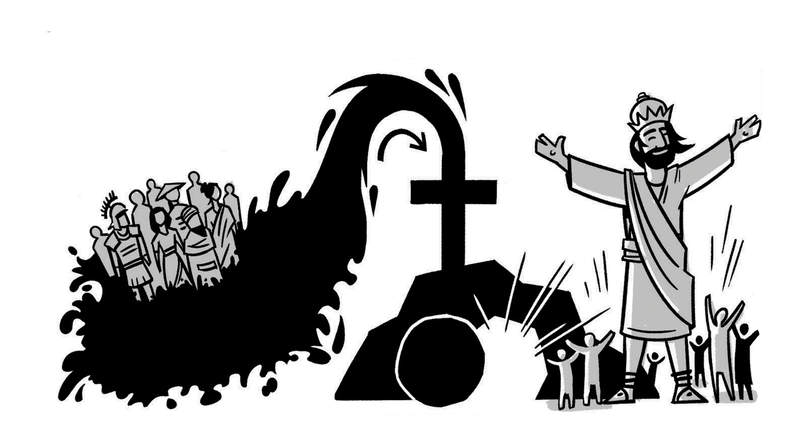
Justification is another rich Old Testament term for Paul, and it is related to God’s righteousness. It literally means “to declare righteous.” Because of what Jesus did on our behalf, we are given a new status before God. Instead of being found guilty, God declares that a person is in right relationship with him and forgiven. This results in a new family, as a person who trusts Jesus is given a place among God’s covenant people. Justification also results in a new future, which begins a journey of life transformation by God’s grace. All of these realities about justification are God’s gift to those who are in Christ because of their faith and loyalty to him.
Let’s notice something William Barclay said about justification … as an act of God’s grace …
“He uses a metaphor from the law courts which we call justification. This metaphor thinks of man on trial before God. The Greek word which is translated to justify is diakioun. All Greek verbs which end in “–oun” mean, not to make someone something, but to treat, to reckon, to account him as something. If an innocent man appears before a judge then to treat him as innocent is to acquit him. But the point about a man’s relationship to God is that he is utterly guilty, and yet God, in his amazing mercy, treats him, reckons him, accounts him as if he were innocent. That is what justification means.
“When Paul says that “God justifies the ungodly,” he means that God treats the ungodly as if he had been a good man. That is what shocked the Jews to the core of their being. To them to treat the bad man as if he was good was the sign of a wicked judge. “He who justifies the wicked is an abomination to the Lord” (Prov.17:15). “I will not acquit the wicked” (Exo.23:7). But Paul says that is precisely what God does.
“How can I know that God is like that? I know because Jesus said so. He came to tell us that God loves us, bad as we are. He came to tell us that, although we are sinners, we are still dear to God. When we discover that and believe it, it changes our whole relationship to God. We are conscious of our sin, but we are no longer in terror and no longer estranged. Penitent and brokenhearted we come to God, like a sorry child coming to his mother, and we know that the God we come to is love.
“That is what justification by faith in Jesus Christ means. It means that we are in a right relationship with God because we believe with all our hearts that what Jesus told us about God is true. We are no longer terrorized strangers from an angry God. We are children, erring children, trusting in their Father’s love for forgiveness. And we could never have found that right relationship with God, if Jesus had not come to live and to die to tell us how wonderfully he loves us.”
In chapter 4, Paul explores the huge implications that all this has for those who can now be part of God’s covenant family. He turns to the story of Abraham in Genesis 15. We’ll explore that in our next session.